Some of the best operations lessons come from small teams doing careful work.
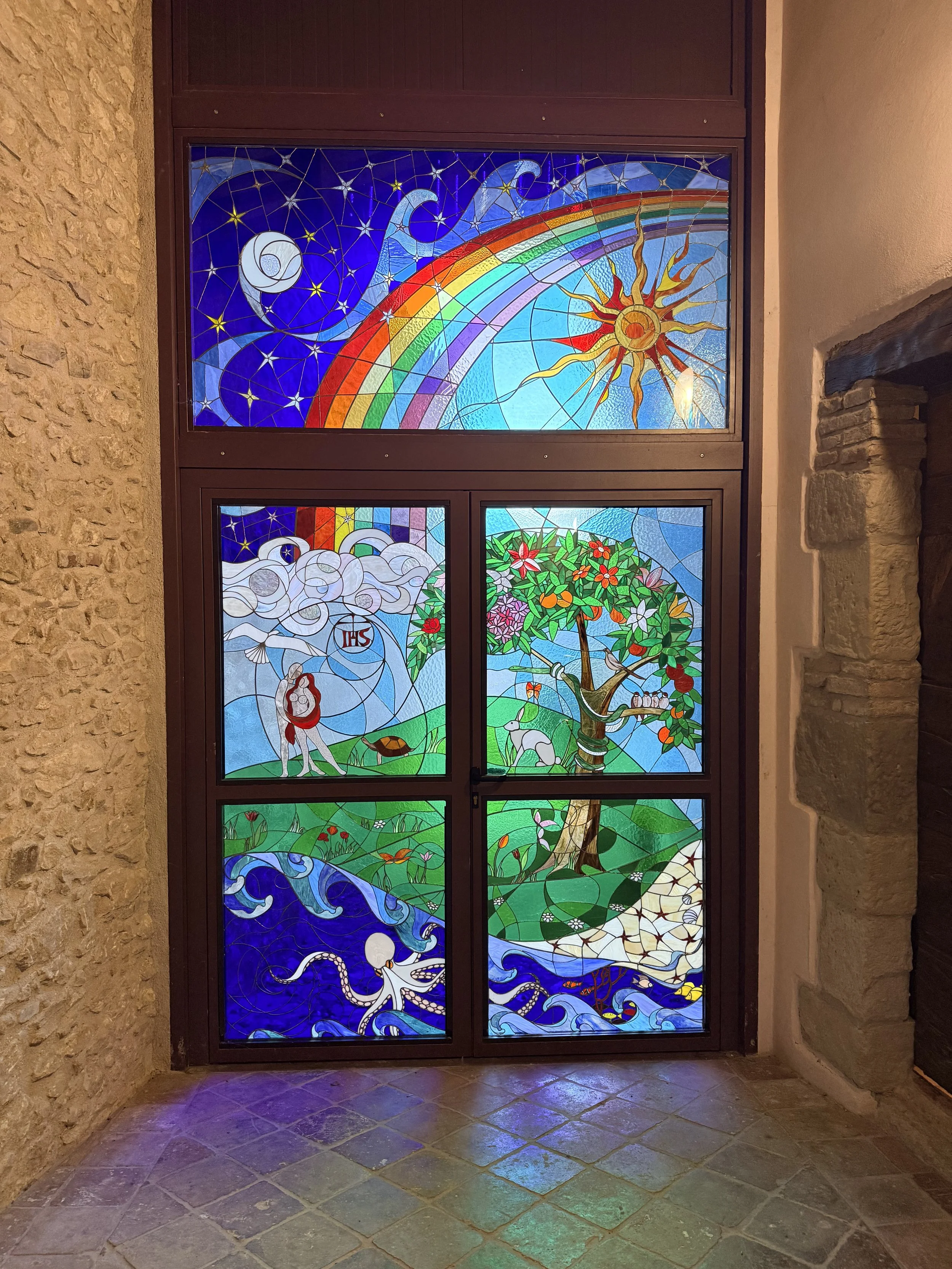
In Pennabilli, Italy, the Augustinian nuns of the Monastero di Sant'Antonio da Padova produce stained glass. The monastery was built in 1517 on a rocky crag above the village. One sister designs each piece, and the others cut and form the glass. Their first finished window, a rainbow with a sun, led to their current commission.
The supply chain concepts are easy to spot:
Specification to production. The design defines what gets made. Everything downstream depends on how well it is drawn.
Role specialization. Design, cutting and forming are separate steps in a defined sequence. Matching the right skill to each step improves quality and flow.
Make-to-order. Work begins when a commission arrives. There is no forecast risk and no finished goods inventory to carry.
First article validation. A completed first window shows what the team can deliver. In manufacturing terms, it works like a pilot run that earns customer confidence.
Yield. Cut glass cannot be uncut. Planning each cut protects material and keeps scrap low.
The community is enclosed, and the public can enter only the attached church. The work happens out of sight and then goes into the world to be seen.
If you are studying for CPIM, pick one product you admire and trace it from design to delivery. The same questions apply, whether the product is a window or a pie.