
One Orange Ball, Five Supply Chains
What the WNBA Finals show about how basketball gets made, moved, and sold
Posted on Oct. 24, 2026
The WNBA Finals are underway, and the Atlanta Dream lead the Golden State Valkyries 2-1 in a best-of-seven series. Game 4 is today (Saturday) at 1 p.m. ET on NBC, and Game 5 follows Monday in Golden State. Atlanta swept the New York Liberty in the semifinals, while the Valkyries, in their second season, swept the defending champion Las Vegas Aces. Behind every possession stands a set of supply chains that most fans never see. For anyone studying or practicing supply chain management, the league is a compact case study.
1. The ball is a bill of materials
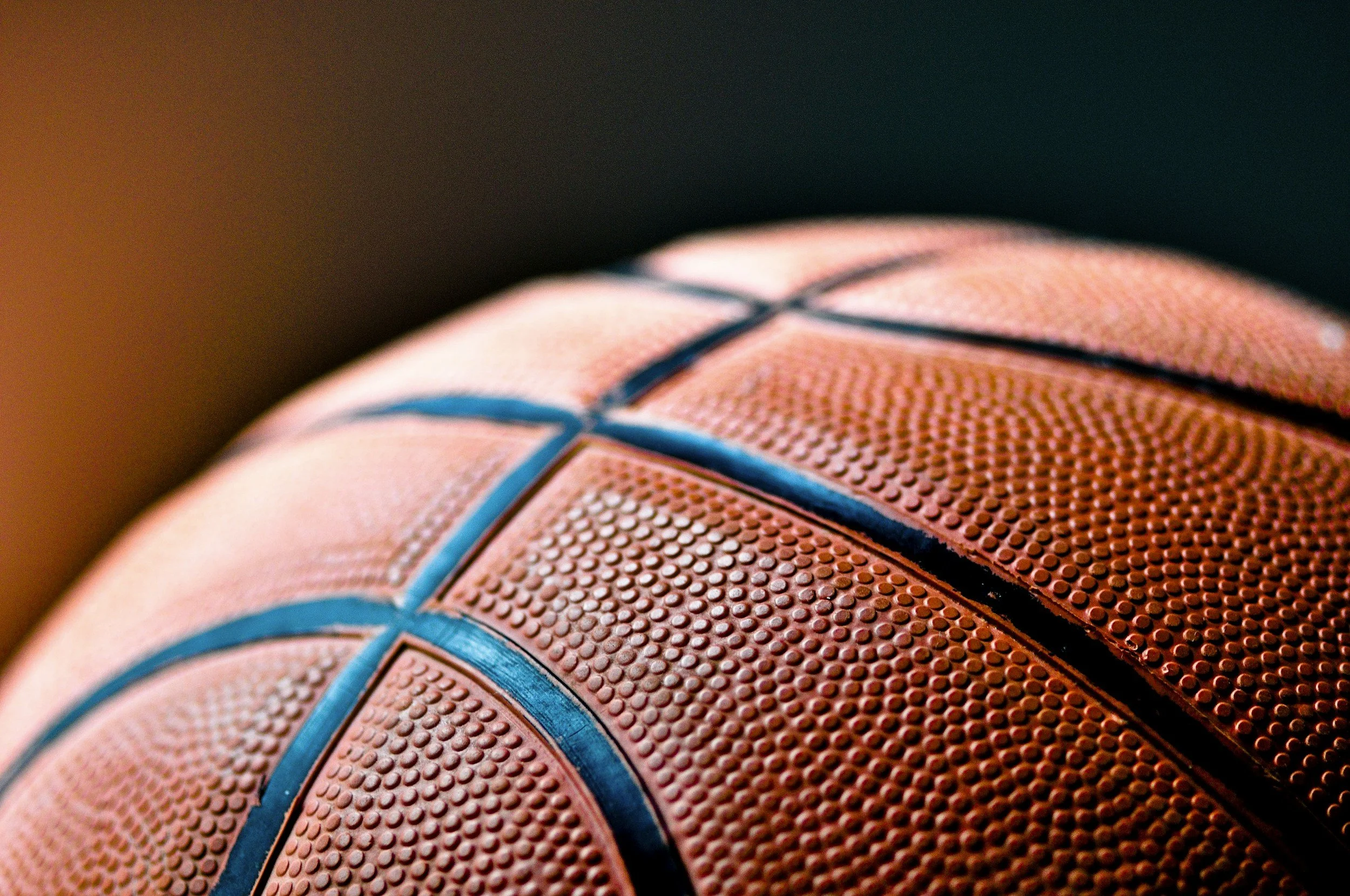
Wilson became the official WNBA game ball with the 2022 season, using the same eight-panel design, materials, and leather as the NBA ball. Reporting on how Wilson builds the NBA version shows four layers: a butyl rubber bladder that holds air at 8 psi, a wound layer of nylon and polyester thread that controls shape, a rubber carcass that supplies rebound, and a leather cover about 1.4 mm thick. The finished ball has to rebound 52 to 56 inches when dropped from 72 inches.
That rebound spec is a good example of a quality requirement flowing back through the bill of materials. Every layer has its own supplier inputs, cure times, and tolerances, and one weak link changes how the ball plays. Using one design across the NBA and WNBA also gives Wilson more volume across a single set of components, which helps with purchasing and production scheduling.
2. The leather has a short supplier list
Horween Leather Co., a Chicago tannery founded in 1905, supplies the leather for Wilson’s NBA ball. The hides are a byproduct of the meat industry, so leather supply follows cattle processing and not basketball demand. Horween chrome-tans the hides, retans them with bark extracts and oils, thins them, embosses them, and dyes them.
A raw material tied to another industry’s cycle, a specialized tannery, and a tight performance spec add up to a classic single-source risk. Supply chain teams in this position plan for it with qualified alternates, safety stock of finished leather, and long-term supplier agreements.
3. Shoes carry the tariff risk
Footwear is where basketball meets global trade policy. In 2025, Nike, one of the largest makers of basketball shoes, told investors it faced about $1 billion in added tariff costs. It planned to cut the China share of its US footwear imports from roughly 16 percent to the high single digits by the end of fiscal 2026, shifting volume to Vietnam, Indonesia, and other Southeast Asian countries. It also renegotiated cost sharing with suppliers and raised prices on selected product lines.
Moving production is slow. New factories need vetting, quality approval, and time to reach full output, so the schedule has to account for lead time in every sourcing decision. A pair of signature sneakers on a player’s feet in the Finals was set in motion many months ago.
4. Jerseys test demand forecasting
When the Fever drafted Caitlin Clark in April 2024, her jerseys sold out almost immediately. Nike, which makes WNBA jerseys, said it had planned enough inventory for the draft and that stock sold out because of extraordinary demand. Fanatics quoted ship dates as late as mid-August for orders placed in April, and Dick’s Sporting Goods quoted dates after October 25.
The episode shows what happens when demand for a niche product changes shape faster than a forecast can follow. Licensed apparel usually depends on a decoration step that can be postponed until demand is known. Holding blank garments and finishing them to order is a standard postponement strategy, and it fits star-driven demand well.
5. Arenas, planes, and people move through a growing network
The league now has 15 teams after adding the Portland Fire and the Toronto Tempo in 2026, and each team played 44 regular-season games. More teams mean more lanes, and Toronto adds a border crossing to the travel plan for visiting teams and their equipment.
The Finals added a capacity problem. The Dream normally play at Gateway Center Arena, which seats 3,500. The league moved Games 3 and 4 to State Farm Arena, which seats more than 17,000, and Game 3 sold out with a 97-71 Atlanta win. Demand outgrew the planned network, and the league answered by switching to a larger node. A change like that involves staffing, equipment, ticketing, and broadcast arrangements as well as the building, so capacity planning belongs on the operations checklist for any event business.
Travel policy has changed a great deal. Until 2024, teams flew commercial except for the playoffs, the Commissioner’s Cup championship, and back-to-back games. The league spent about $4 million on charters in 2023. Commissioner Cathy Engelbert then estimated about $25 million a year for full-time charters over the next two seasons, more than six times that figure. With the Finals moving between Atlanta and Golden State, schedule reliability and player recovery matter on every leg. Those are service levels in the same way on-time delivery is a service level for a distribution center.
The 2026 season also began on schedule on May 8 after a new labor agreement was ratified in March. A stable agreement gives the league certainty on its largest cost input, which is player compensation, and lets everyone else in the chain plan around a known calendar.
What practitioners can take from the Finals
Map the full bill of materials. The ball, the shoe, and the jersey each depend on suppliers several tiers back. Risk usually concentrates in the second and third tier.
Treat lead time as a strategic variable. Sourcing shifts in footwear take quarters to complete, so decisions made after a tariff announcement arrive late.
Postpone differentiation. Finish and personalize late in the process when demand is uncertain.
Keep flexible capacity in reserve. The move from a 3,500-seat arena to one above 17,000 shows how a network adapts when demand exceeds the plan.
Price service into the network. Charter flights show that a higher service level has a cost that leadership can plan for and defend.
Connect planning to the calendar. A fixed Finals schedule works like a firm demand window in sales and operations planning.
The next time a game is on, watch the ball. It has passed through a tannery, a thread mill, a rubber plant, and an assembly line to reach the court, and the same is true of nearly everything else in the arena.
Sources
CBS Sports: 2026 WNBA playoffs bracket and Finals schedule
WNBA: Game recap, Valkyries vs. Dream, Finals Game 3
WNBA: Wilson to become official game ball of the WNBA
Popular Mechanics via AOL: How Wilson makes official NBA basketballs
Supply Chain Wizard: Nike braces for $1B tariff with big supply chain moves
Front Office Sports: Caitlin Clark economy, tickets, and jerseys (April 2024)
Front Office Sports: WNBA charter flights and Cathy Engelbert (May 2024)