Summer seafood season looks simple from a restaurant menu. It is not. Behind every lobster roll, crab leg, and shrimp cocktail is a supply chain under pressure from warming oceans, collapsed fisheries, trade policy, and a chronic labor shortage that no visa program has fully solved. Here's what's actually going on.
Lobster: Warming Oceans Are Redrawing the Map
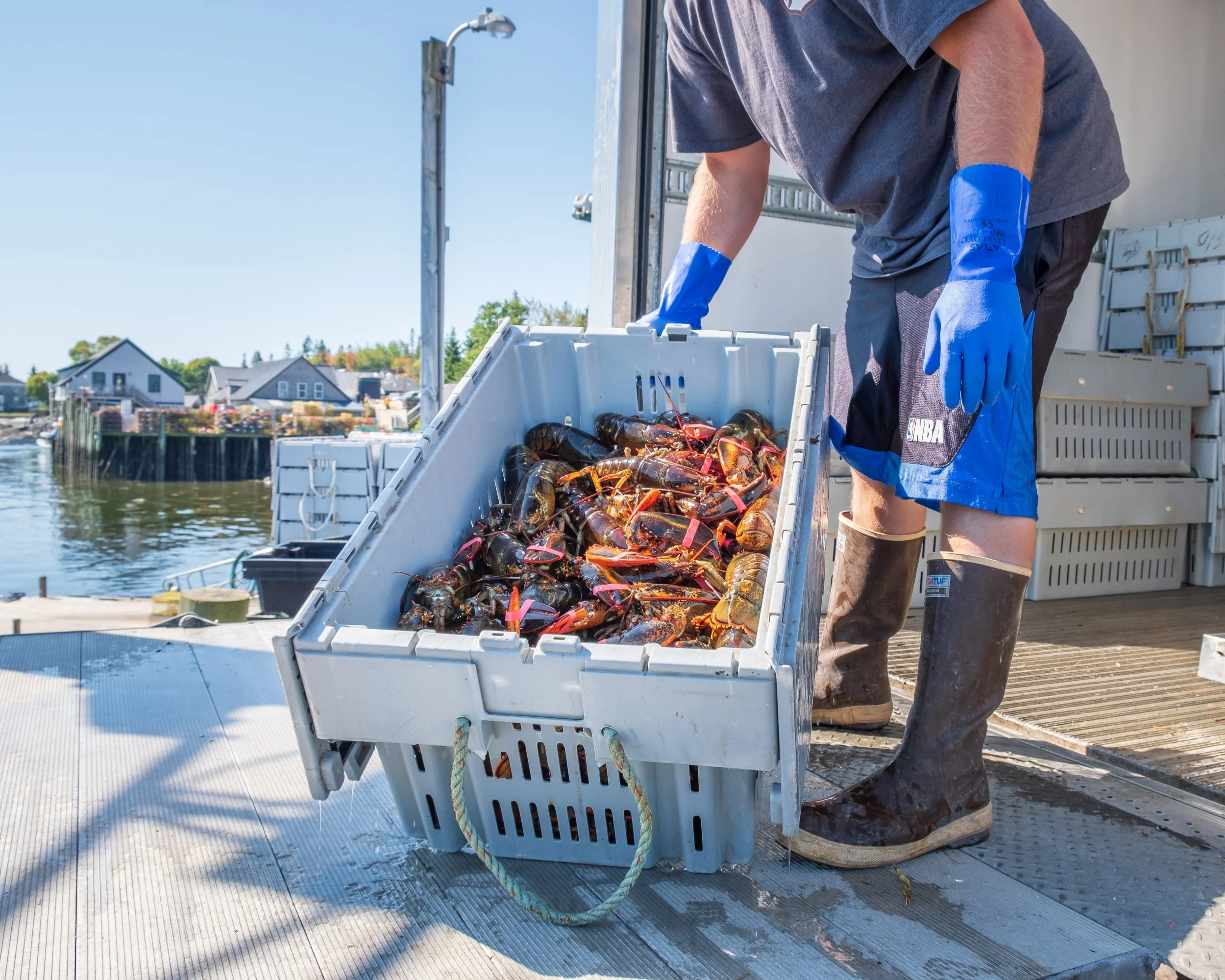
Maine's lobster catch has declined for the fourth consecutive year. The haul came in at 78.8 million pounds in 2025 — down from more than 110 million pounds in 2021. That's a 28% drop in four years, and the trend isn't reversing.
The core driver is ocean warming. As Gulf of Maine waters heat up faster than almost any ocean region on Earth, lobsters are migrating northward into Canadian waters — outside the reach of Maine's fishing fleets. High fuel and gear costs are squeezing the fishermen who remain. The result is a structurally smaller U.S. domestic supply chasing the same summer demand.
At the wholesale level, hard-shell lobsters are running around $7.63/lb this July. The retail experience is blunter: Maine lobster rolls are averaging $36 each — and that's before the tourist markup.
The one bright spot: new-shell season is now underway, with softer-shell lobsters flooding the market in July and August. It's the seasonal relief valve that keeps summer lobster rolls from being completely out of reach. But it's a narrow window, and supply chain planners for restaurants and retailers need to time their purchasing around it carefully.
Crab: Russian Supply Gone, Alaskan Harvests Thin
The crab market is at the premium end of a structural squeeze. The big news at the start of 2026: Russian king and snow crab are effectively banned from U.S. import under the Marine Mammal Protection Act, after Russian fisheries failed to meet NOAA's comparability standards. Russia was previously a major source. That supply is gone.
What's left is a thin Alaskan harvest — the Bering Sea yielded just 4.72 million pounds of snow crab this season, a fraction of historical volumes — and prices that reflect it. Alaska red king crab is trading at near-record levels:
6/9 count king crab legs: ~$60/lb wholesale
Bristol Bay red king crab: $124.95/lb at retail
Giant snow crab: ~$46.95/lb
This isn't a spike — it's the new baseline for a market that lost both its primary foreign supplier and is harvesting at reduced domestic levels simultaneously. Norway, Canada, and Argentina remain eligible for U.S. trade, but none of them can plug the volume gap Russia left behind.
Shrimp: A Tariff Whipsaw
Shrimp is the most globally traded seafood in the world, which means it's the most exposed to trade policy — and 2026 has delivered plenty of that. After a period of tariff-driven price volatility, the tariffs were struck down, and imported shrimp prices have dropped to near-record lows across most sizes and forms. Good news for consumers and restaurateurs buying in volume.
The catch: acute shortages in larger whole white shrimp (10/15 through 21/25 counts) — the sizes that drive the premium end of shrimp cocktails and grilled entrées. Availability is tight precisely where margin is highest.
Meanwhile, domestic Gulf shrimpers face a separate problem: the boats are there, but the crews aren't. The Texas Shrimp Association has asked the Trump administration for 100 additional H-2B visas this season, with industry groups saying they simply cannot fill boats with local workers. That story isn't new, but it's getting worse.
Labor: The Bottleneck Nobody Talks About Enough
Fish doesn't process itself. Behind every dock and processing plant is a seasonal workforce that the seafood industry has never been able to fully staff through domestic labor alone.
The H-2B temporary work visa program is the primary mechanism — and it's under pressure. The standard annual cap is 66,000 visas. The Trump administration authorized an additional 64,716 for 2026, effectively doubling the pool. And it's still not enough. Louisiana's seafood and crawfish processing plants reported worker shortages this season despite the expanded allocation, and Texas shrimpers are asking for more.
The structural problem: seafood processing is intensely seasonal, concentrated in specific coastal geographies, physically demanding, and often remote. The post-pandemic workforce has shown it has better alternatives. Visa caps that reset annually can't accommodate multi-year labor planning. And when the boats come in with a good catch, you need bodies at the processing line now — not in six to eight weeks when a visa application clears.
This is the silent supply chain constraint that shows up in the final price of everything above. It's not just about catching seafood — it's about having the people to handle it when it arrives.
What This Means for Supply Chain Teams
Summer seafood is one of the most complex commodity supply chains in food — it's wild-caught (you can't control yield), perishable (cold chain failures are total losses), globally traded (tariff exposure is constant), and labor-intensive at every stage from vessel to plate.
A few things worth flagging for procurement and ops teams:
Geographic diversification isn't optional anymore. With Russian crab out and Maine lobster declining, buyers who were over-indexed on single sourcing regions are feeling it. Norway, Canada, and Chilean alternatives need to be active relationships, not backup plans.
Labor risk is supply risk. H-2B cap timing, application windows, and allocation uncertainty should be built into seasonal inventory planning — not treated as an HR problem. A processing bottleneck is a supply bottleneck.
Tariff volatility demands scenario planning. Shrimp pricing swung dramatically on trade policy changes this year. Buyers without price-band triggers and flexible sourcing agreements are always reacting rather than managing.
The ocean isn't getting colder. The labor pool isn't getting easier. The supply chains that work in summer seafood will be the ones that plan around those facts — not the ones that assume this summer will look like last summer.
Sources: SeafoodSource — Lobster prices · Bangor Daily News — Lobster rolls · US News — Maine catch decline · SeafoodSource — H-2B visas · National Fisherman — H-2B · KATC — Louisiana labor · Undercurrent News — Lobster wholesale · Alaska Fish News — Crab trade